
India Targets 25 Crypto Exchanges in Massive AML Crackdown
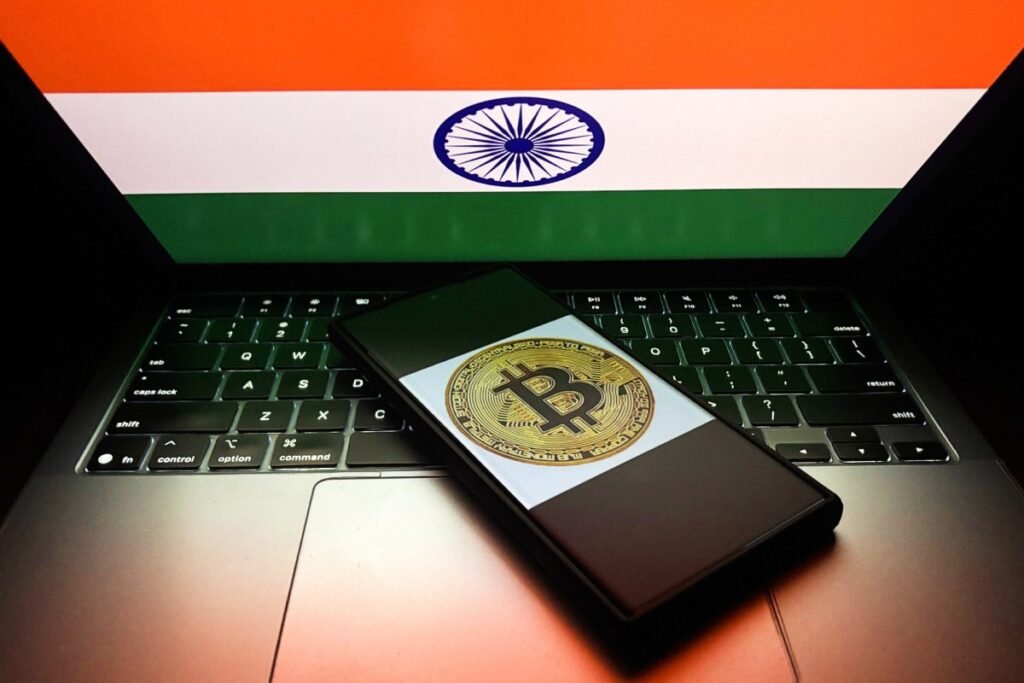
On Wednesday, the Financial Intelligence Unit India (FIU-IND) ordered 25 offshore cryptocurrency exchanges, including BingX and LBank, to block access to their platforms in India due to their failure to comply with local anti-money laundering (AML) regulations.
Major Offshore Platforms Face Immediate Block Orders
The Indian Finance Ministry confirmed that the FIU-IND issued compliance notices to 25 prominent offshore virtual asset service providers. The targeted platforms include BingX, LBank, CoinW, ProBit Global, BTCC, AscendEX, Zoomex, CEX.IO, and Poloniex. Alongside the notices, the regulator directed these platforms to withdraw their mobile applications and websites from public access within India, though several services remained temporarily accessible at the time of reporting.
The scale of the crackdown is significant. According to data from CoinMarketCap, just 14 of the 25 affected exchanges collectively manage over $9 billion in assets and generated approximately $20 billion in trading volume within a recent 24-hour window.
CEX.IO and Industry Players Respond to the FIU Order
In response to the regulatory action, CEX.IO has initiated internal reviews to address the government’s concerns. Mark Taylor, Head of Financial Crime at CEX.IO, stated that the company is actively researching the notice and intends to present its position to the Indian regulator.
“We are actively exploring pathways to ensure alignment with India’s regulatory requirements and any required registration with Indian authorities to ensure long-term accessibility for our users in the region,” Taylor said. He confirmed that no immediate operational changes have been implemented for Indian users yet.
However, Taylor advised caution, urging clients to stay updated on official announcements regarding potential service interruptions. “Given the FIU order, we encourage customers to remain attentive to official communications from both regulators and CEX.IO regarding possible restrictions on access, local payment channels, or app availability. Should there be any impact to your account or services, we will communicate transparently and provide guidance on next steps,” he added. Other affected entities, including BingX, LBank, CoinW, and ProBit Global, have not yet commented on the development.
India’s Tightening Grip on Virtual Digital Assets
While India currently lacks a comprehensive, standalone legislative framework for cryptocurrencies, the government has steadily tightened its oversight. In March 2023, the Indian Finance Ministry mandated that all virtual digital asset service providers operate under the purview of the Prevention of Money Laundering Act (PMLA) of 2002. This designation requires all exchanges catering to Indian users to register formally with the FIU-IND and adhere strictly to domestic reporting standards.
The Precedent Set by Binance and Coinbase
To date, at least 50 cryptocurrency exchanges have successfully registered with India’s anti-money laundering watchdog. The FIU-IND has previously taken action against global giants such as Binance, Coinbase, KuCoin, and OKX. While OKX chose to exit the Indian market entirely last year, other major players opted for compliance.
Binance officially resumed its operations in India in August 2024 after completing its registration process, following a similar move by KuCoin. Coinbase also re-entered the market earlier this year and recently launched an early-access program for registered Indian users, although its full suite of services is not yet fully operational in the country.