
How Airwallex Rejected Stripe to Build a $1.3B Rival
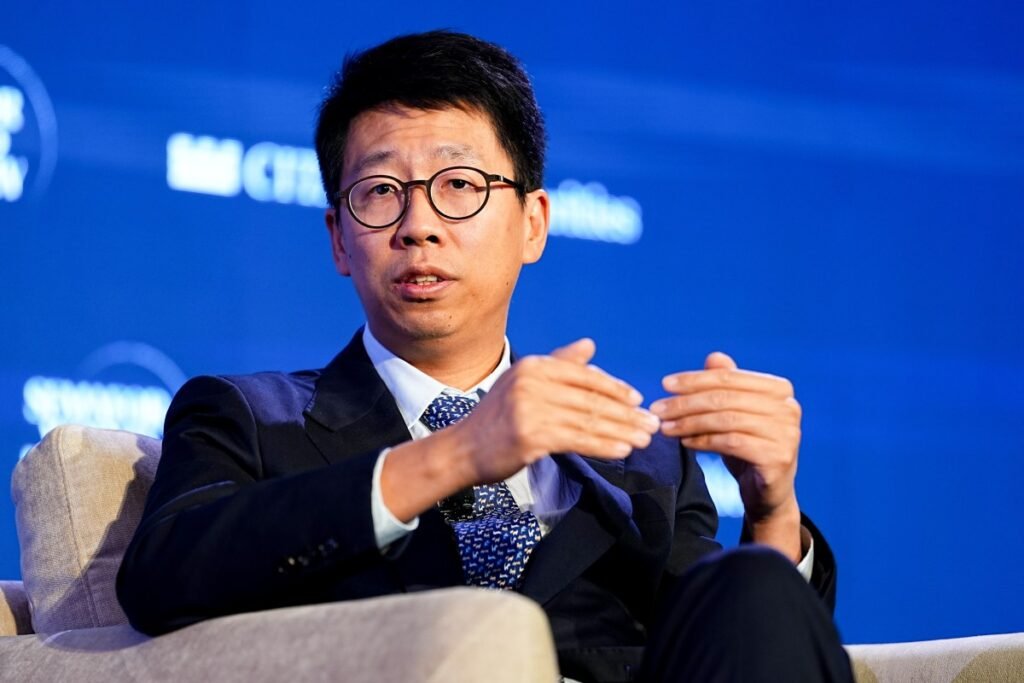
In a high-stakes decision that redefined the fintech landscape, Airwallex CEO Jack Zhang rejected a massive $1.2 billion acquisition offer from Stripe in San Francisco to independently build a global financial infrastructure network that now generates over $1.3 billion in annualized revenue.
The $1.2 Billion Temptation
At just 34 years old and only three and a half years into his startup journey, Jack Zhang found himself sitting in the multi-story San Francisco home of legendary Sequoia investor Michael Moritz. Looking out at the Golden Gate Bridge, Moritz made a highly compelling pitch: sell Airwallex to Stripe. At the time, the Melbourne-founded startup was bringing in a modest $2 million in annualized revenue. Stripe’s offer represented an astronomical 600x revenue multiple.
Moritz argued that Stripe’s Patrick Collison was a generational entrepreneur and that joining forces would compound into an unmatched global powerhouse. Pondering the offer, Zhang spent two restless weeks walking the streets of San Francisco. At one point, he even agreed to the deal.
However, a flight back to Australia changed everything. Back in his Melbourne office, Zhang looked at his whiteboard and realized his original ambition remained unfulfilled: to construct a seamless global financial network that allows any enterprise to operate locally anywhere on Earth. Supported by two of his co-founders who voted against the sale, Zhang walked away from the acquisition.
That gamble has paid off handsomely. Today, Airwallex processes nearly $300 billion in annualized transaction volume and is growing at an impressive 85% year-over-year, firmly establishing itself as a formidable competitor to Stripe.
From Lemon Farms to Trading Desks
Zhang’s relentless drive is rooted in a lifetime of overcoming obstacles. Moving from Qingdao, China, to Melbourne at age 15 without his parents, he lived with a host family and spoke minimal English. When his family faced sudden financial ruin, Zhang worked four jobs simultaneously to pay for his computer science degree at the University of Melbourne. He washed dishes, bartended, worked graveyard shifts at a gas station, and picked lemons during school breaks—a job he still recalls as his most physically demanding.
He eventually secured a lucrative role writing trading algorithms for an Australian investment bank. While the job was financially rewarding, Zhang found it intellectually uninspiring.
var playerInstance_jwplayer_6a6913d11903f = jwplayer( “jwplayer_6a6913d11903f” );
playerInstance_jwplayer_6a6913d11903f.setup({
playlist: “https://cdn.jwplayer.com/v2/media/nsQAyeWN”,
});
Before launching Airwallex, Zhang was a serial entrepreneur, starting roughly ten different ventures. His early projects included a magazine at age 14, a real estate development firm, a burger franchise, and import-export businesses trading textiles, wine, and olive oil between Australia and Asia.
The spark for Airwallex came while Zhang was operating a specialty coffee shop in Melbourne. When trying to pay bean suppliers in Brazil, Guatemala, and Indonesia, his co-founder Max Li noticed payments frequently vanished or were frozen by U.S. intermediary banks enforcing OFAC sanctions. The frustration of dealing with slow, costly correspondent banking networks inspired Zhang to study the inner workings of SWIFT and design a superior global money movement system.
Choosing the ‘Path of Max Resistance’
Rather than taking shortcuts, Airwallex chose what Zhang calls the path of max resistance. The company has spent years securing nearly 90 financial licenses across 50 markets—roughly double what Zhang estimates Stripe holds. Obtaining these licenses required immense patience; in Japan, the process took seven years. In other emerging markets, Airwallex had to buy defunct shell companies just to acquire their licenses, completely rebuilding the underlying technology from scratch.
This regulatory groundwork is not just about compliance; it offers a massive competitive advantage. For example, while Stripe and Square can process payments in Japan, they must immediately transfer those funds to a merchant’s external bank account. Airwallex, holding a specialized fund transfer operator license, can retain those funds within its ecosystem. This allows clients to hold balances, issue cards, and manage expenses without money ever leaving the platform.
This setup yields massive foreign exchange savings. A U.S. merchant collecting Australian dollars can bypass the standard 2% to 3% conversion fees charged by traditional processors. Instead, they can hold local AUD balances to pay local suppliers, run payroll, or purchase digital ads at interbank rates.
The Power of Owning the Infrastructure
Zhang firmly believes that building on top of third-party payment rails is ultimately unscalable. By owning the end-to-end infrastructure, Airwallex maintains full visibility over transaction data, allowing them to troubleshoot issues instantly and build new financial products cleanly on top of their own stack.
While it took Airwallex six and a half years to hit $100 million in annual recurring revenue (ARR), owning their infrastructure allowed them to scale from $100 million to $1 billion in just over three years.
Stripe vs. Airwallex: A Growing Clash
For years, Stripe and Airwallex operated in different regions and targeted different audiences. Airwallex primarily served CFOs, treasurers, and finance teams in Australia and Southeast Asia, with over 90% of customers onboarding through a business account before adopting payment processing. Conversely, Stripe focused on U.S. software developers who integrated payment APIs into new startups.
Now, those boundaries are blurring. As Stripe expands globally and Airwallex aggressively enters the United States, the two companies are competing head-on. Zhang acknowledges that Stripe still holds a massive brand advantage, particularly among Silicon Valley developers.
This rivalry has created unique dynamics among venture capitalists. Sequoia Capital—which originally backed Airwallex through its China arm, now rebranded as Hongshan—remains a major shareholder in both companies. Greenoaks Capital also holds significant stakes in both firms.
Despite the overlapping cap tables, the valuation gap remains stark. Stripe was valued at $159 billion in a recent tender offer, processing $1.9 trillion in volume. Airwallex was valued at $8 billion in its last funding round. However, Zhang points out that Stripe’s processing volume is only about six times larger than Airwallex’s, suggesting that Airwallex is closing the financial gap much faster than the valuations indicate.
The Road to a $20 Billion Goal
While an initial public offering (IPO) is likely three to five years away, Zhang is focused on highly ambitious long-term metrics. By 2030, he aims to serve one million customers, generate $20 billion in annual revenue, and increase average revenue per customer to $20,000.
To achieve this, Airwallex is launching a suite of AI-driven autonomous finance tools designed to execute transactions and manage treasury workflows automatically. Zhang believes that a decade of proprietary transaction data across invoicing, payroll, and card issuing gives Airwallex an AI training model that competitors cannot easily match.
Whether this deep infrastructure focus will allow Airwallex to displace Stripe remains to be seen. While the two founders were once friendly during acquisition talks, the relationship has cooled. At a recent industry gathering hosted by Greenoaks Capital, Zhang and Collison did not exchange a single word.