
Is ‘Buy Now, Pay Later’ Fueling a Silent Debt Crisis?
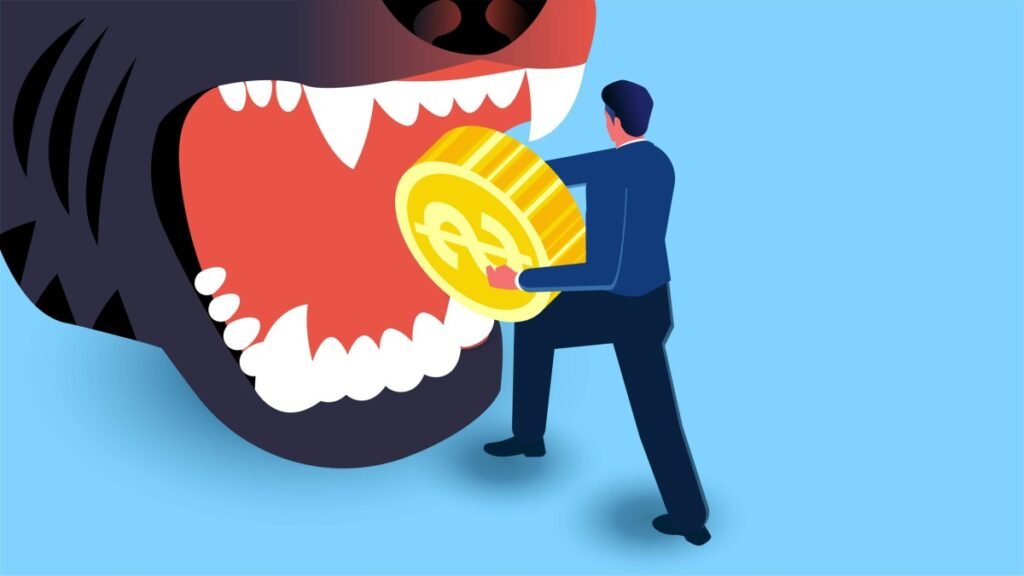
Capital One co-founder Nigel Morris warned at the Web Summit in Lisbon this week that the rapid surge of “Buy Now, Pay Later” (BNPL) services for daily essentials like groceries signals an invisible, dangerous consumer debt crisis. As an early investor in Klarna and other prominent BNPL platforms like Aplazo in Mexico, Morris expresses deep concern over how these short-term credit options are currently being utilized by financially strained households.
“To see that people are using [BNPL services] to buy something as basic and fundamental as groceries,” Morris stated during an onstage interview at Web Summit, “I think is a pretty clear indication that a lot of people are struggling.”
Recent market data strongly supports his anxiety. According to the financial services firm Empower, BNPL users in the United States have skyrocketed to 91.5 million. Furthermore, survey data published in late October by Lending Tree revealed that 25% of users relied on installment plans to finance their groceries earlier this year.
This shift marks a departure from the discretionary luxury purchases—such as high-end designer apparel and electronics—that originally popularized the BNPL model. Now, debt accumulation is outpacing repayment rates. Lending Tree reports that delinquency is rising sharply: 42% of BNPL consumers missed at least one payment in 2025, up from 39% in 2024 and 34% in 2023.
The Rise of ‘Phantom Debt’ in the Financial System
Beyond individual household struggles, this trend represents a systemic threat to the broader venture-backed fintech sector, drawing parallels to the pre-2008 mortgage crisis. However, this modern debt wave remains largely hidden from traditional economic indicators.
Because the vast majority of BNPL providers do not report active balances to major credit bureaus, they generate what financial regulators term “phantom debt.” This lack of reporting prevents traditional lenders from seeing if an applicant has active micro-loans across multiple competing platforms simultaneously.
“In a world where, if I’m a buy-now-pay-later provider, and I’m not checking bureau data, I’m not feeding bureau data, I am oblivious to the fact that Nigel may have taken out 10 of these things in the last week,” Morris explained. “[That’s] absolutely true.”
Storm Clouds and Regulatory Rollbacks
The limited data available paints a troubling picture. Consumer Financial Protection Bureau (CFPB) data published in January—following market monitoring orders issued to major industry players like Affirm, Afterpay, and Klarna—indicated that roughly 63% of borrowers maintained multiple active BNPL loans concurrently, while 33% held active balances across different providers.
The CFPB report also noted that in 2022, one-fifth of consumers with established credit histories financed at least one purchase via BNPL, up from 17.6% in 2021. Additionally, heavy users—defined as those originating more than one BNPL loan per month on average—grew to 20% of the user base, while the average number of annual loans per borrower climbed from 8.5 to 9.5.
The underlying credit profile of these users is equally precarious. As of 2022, nearly two-thirds of BNPL borrowers possessed subprime or deep-subprime credit scores, yet applicants in these categories faced an exceptionally high approval rate of 78%.
While the total BNPL market is valued in the hundreds of billions—meaning it does not yet pose a multi-trillion-dollar systemic threat like the 2008 housing market—the combination of high approval rates, low visibility, and financially vulnerable borrowers warrants close observation. With economic pressures mounting on subprime consumers, particularly in segments like auto lending, current default rates are likely higher than official records suggest.
The Impact of Federal Policy Shifts
The lack of up-to-date, centralized data stems directly from recent federal regulatory shifts. Under the Biden administration, the CFPB sought to apply Truth in Lending Act protections to BNPL transactions, treating them similarly to traditional credit card purchases.
However, the Trump administration chose to not prioritize enforcement of this rule. Shortly thereafter, CFPB acting director Russell T. Vought rescinded 67 interpretive rules and policy statements dating back to 2011, including the BNPL framework, arguing that the regulations imposed heavy administrative burdens on fintech companies while offering minimal consumer benefits.
Following these rollbacks, the CFPB issued a study presenting a surprisingly different message. By focusing exclusively on first-time borrowers, the agency reported a 98% repayment rate among subprime or credit-invisible customers, concluding that BNPL access did not correlate with immediate financial distress.
This stark contrast between a 98% success rate for beginners and a 42% delinquency rate across the broader user base highlights a significant regulatory blind spot. Currently, there is no comprehensive mechanism to track long-term borrower behavior across multiple concurrent accounts.
To address this federal oversight, New York state implemented strict licensing requirements for BNPL firms. However, a localized, state-by-state regulatory patchwork remains easy for sophisticated fintech corporations to navigate.
Spillover Risks and the Consumer Credit Cascade
Morris, who has spent nearly two decades investing in fintech, remains cautious about comparing the current climate directly to the 2008 crash, though he acknowledges growing macroeconomic pressures.
“If you take a half step back and we look at the U.S. consumer at the moment… delinquency is not rising yet. Charge-offs are not rising yet. But there’s clearly storm clouds on the horizon,” Morris noted. He pointed to unemployment rates hitting 4.3%, political friction surrounding tariffs and immigration, and a general reluctance among small-to-medium businesses to invest over the past nine months.
Compounding these issues is the resumption of federal student loan repayments. According to a September Congressional Research Service analysis, approximately 5.3 million student loan borrowers are in default, with another 4.3 million facing late-stage delinquency.
The primary concern for financial institutions is not BNPL debt in isolation, but its broader spillover effects on other credit products. Because BNPL installments are small, borrowers often prioritize paying them off to maintain access to the service, leaving larger obligations like auto loans, credit cards, or student loans to fall into default first.
Testing the Ethical Boundaries of Fintech
Morris has operated on both sides of the consumer finance ecosystem. After pioneering subprime lending models at Capital One, he pivoted to backing disruptive startups like Klarna, which recently went public with a $13.5 billion valuation despite narrow profit margins driven by credit default absorption.
When asked where the line sits between helping underbanked populations and enabling unsustainable debt accumulation, Morris emphasized the need for a corporate moral compass, referencing a internal standard he used at Capital One called “the mom test.”
“If this idea was presented to your mother and she called you up and said, ‘Son, should I take this product?’ And if you can’t unequivocally say, ‘Yes, it’s a good product,’ you should not be offering it to the American people,” Morris explained.
A major structural issue remains: because BNPL platforms do not consistently report positive repayment histories to credit bureaus, consumers cannot use these services to build their credit scores and transition to lower-cost traditional credit products. According to Morris, keeping users outside the traditional bureau system is a deliberate retention strategy for some providers who do not want their customers to “graduate” to standard banking products.
The Expansion of Embedded Finance
Despite these ethical questions, the BNPL model is integrating deeper into the global financial infrastructure. Klarna has operated as a licensed bank in Europe since 2017, while Affirm has issued nearly 2.8 million physical debit cards, bringing installment options directly to brick-and-mortar retail checkout counters. Both providers are now natively integrated into Apple Pay and Google Pay ecosystems.
Traditional financial giants are also expanding their footprints in the space. PayPal reported processing $33 billion in BNPL transactions in 2024, representing a 20% year-over-year increase. Major commercial banks now offer post-purchase transaction splitting, while backend payment processors like Adyen, Stripe, and JPMorgan Payments have embedded Klarna’s services directly into millions of merchant checkout flows.
Morris notes that software companies are increasingly shifting their monetization models toward these embedded financial services. “Five years from now, where are you going to make your money?” Morris asked. “They say, ‘You know what, I think I’m going to make more money in embedded finance than I am in my core software.’ It starts off as a nice little add-on, but… it’s often these financing businesses that have the greatest longevity and market power.”
The Next Wave: Business-to-Business Installments
The next frontier for BNPL lies in the business-to-business (B2B) trade credit market. Valued at $4.9 trillion in active payables among American firms alone, this sector is roughly four times larger than the entire U.S. consumer credit card market. Platforms like Hokodo report that when small businesses gain access to BNPL terms, their average transaction sizes increase by 40%, accelerating corporate debt accumulation.
To fund this rapid growth, BNPL debt is being packaged and securitized for institutional investors at a rapid pace. Last year, Elliott Advisors acquired Klarna’s $39 billion British loan portfolio, while KKR secured a deal to purchase up to $44 billion in BNPL debt from PayPal. As of June, Affirm had issued approximately $12 billion in asset-backed securities.
This financial engineering closely mirrors the subprime mortgage securitization playbook: slicing up high-risk consumer debts and selling them to global investors under complex structures that obscure the underlying default risk—all while the primary credit bureaus remain blind to the borrowers’ total debt load.
Two Bubbles, Different Headlights
While Silicon Valley remains heavily focused on the highly visible AI infrastructure bubble—characterized by massive data center investments and soaring valuations that are currently dominating headlines—the BNPL bubble is developing quietly in the background.
This unregulated, invisible debt pool directly impacts roughly 40% of them—specifically the most financially vulnerable demographics. It represents a growing population of consumers financing basic meals in four installments while juggling student loans and multiple active BNPL balances.
While strong performance in specific economic sectors can obscure these underlying structural issues, an unsustainable rise in consumer defaults will eventually impact the broader tech ecosystem, venture capital firms, and retail markets. Morris is not predicting an imminent collapse, but he is urging financial institutions and regulators to pay close attention to these warning signs before systemic corrections become unavoidable.