
Google Launches Flex Credit Card in India’s UPI Push
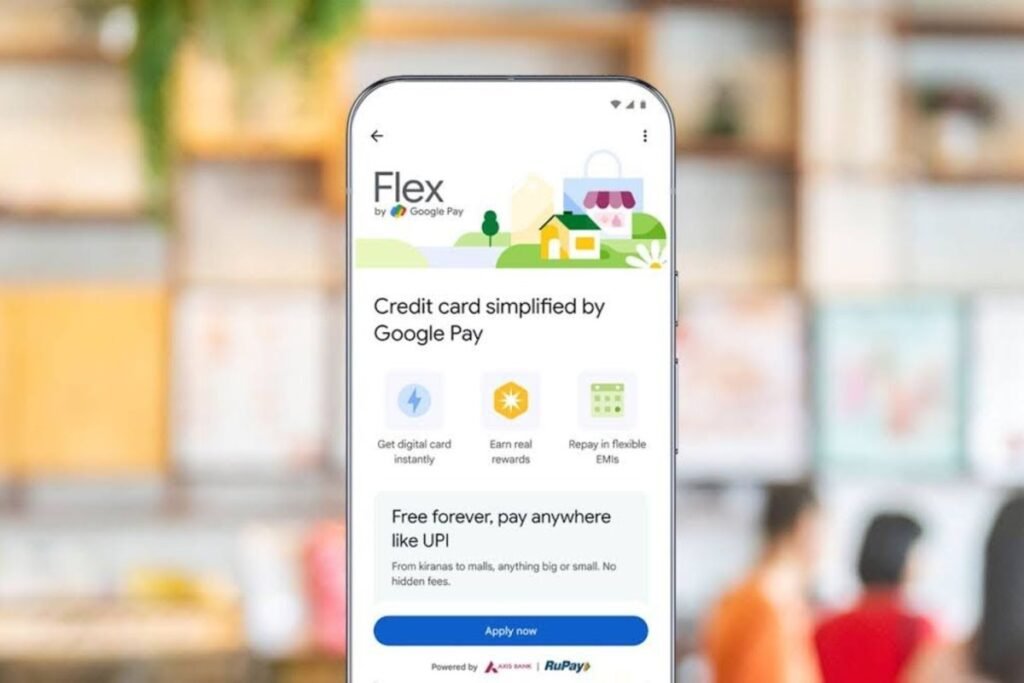
Google launched its new UPI-linked credit card, Flex by Google Pay, in India on Wednesday in partnership with Axis Bank to bridge the country’s massive credit gap, targeting a market of 1.4 billion people where fewer than 50 million currently hold a credit card.
Bridging India’s Massive Credit Gap
While the government-backed Unified Payments Interface (UPI) has completely revolutionized digital transactions across India, it has not automatically translated into widespread access to formal credit. This persistent disparity has opened a massive opportunity for technology giants and financial institutions to integrate lending products directly into popular payment applications, driving Google’s aggressive expansion into the sector.
How Flex by Google Pay Works
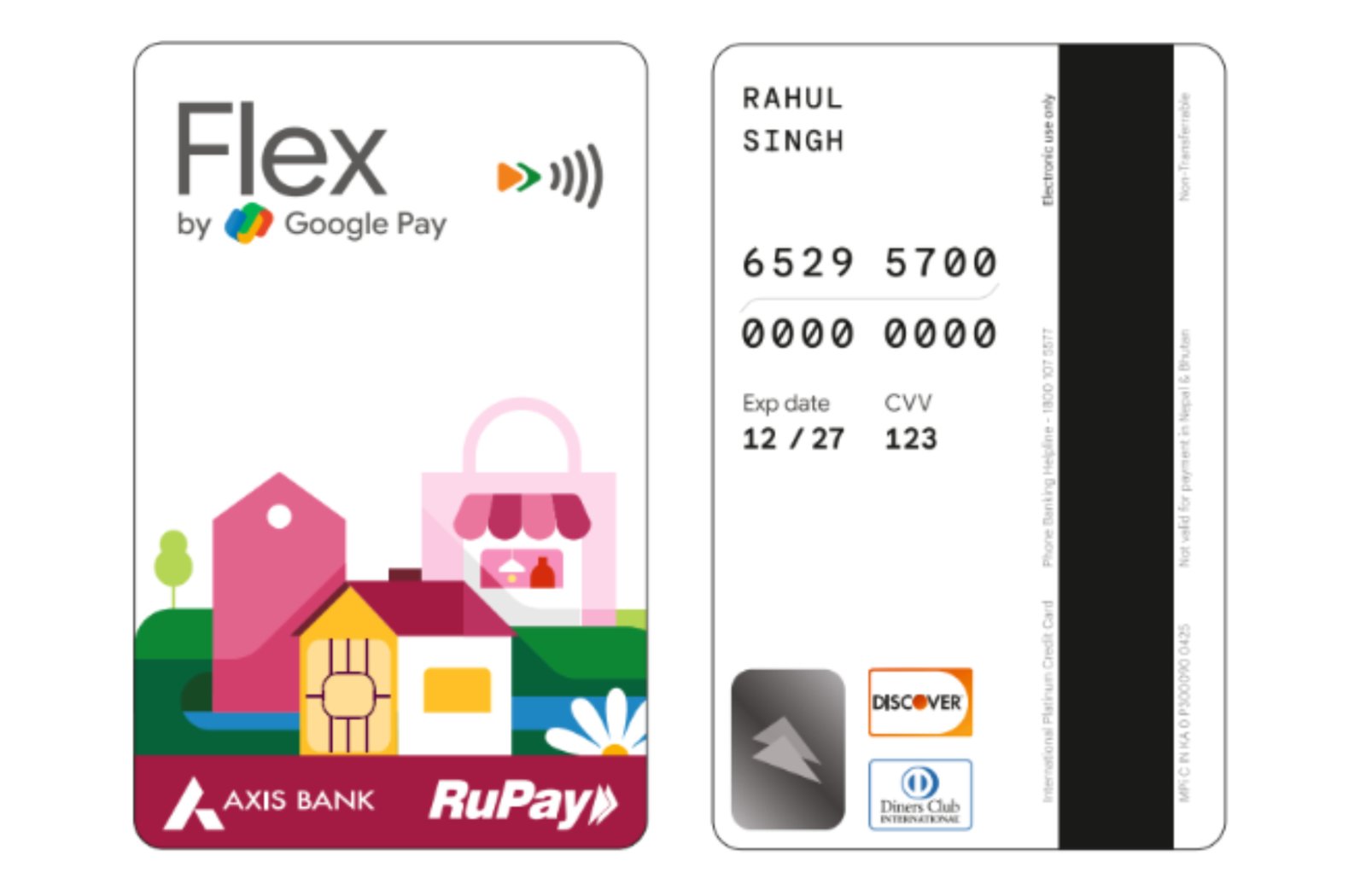
Issued entirely digitally through the Google Pay app, the new Flex card operates on the native RuPay network, making it highly compatible with both online portals and physical merchant locations. To incentivize adoption, the card features a unique rewards program that distributes virtual “Stars” on transactions, where each Star converts directly to ₹1. Within the app, users can easily track their monthly expenditures, settle bills, split balances into flexible monthly installments, block their cards instantly, or reset PINs for enhanced security.
This debut marks a major step forward in Google Pay’s ongoing mission to democratize financial services in India, where it already collaborates with various banking and non-banking financial companies to offer personal and gold-backed loans. By leveraging Google Pay’s massive, digitally active user base, Axis Bank can scale its credit distribution exponentially without relying on traditional, physical brick-and-mortar branches. Google has confirmed plans to onboard additional banking partners to expand the program soon.
Transparent Pricing and Repayment Models
Google has eliminated application fees for the Flex card. However, final pricing, interest rates, and other applicable charges will be customized based on each user’s unique credit profile. To maintain transparency, all costs associated with EMI conversions are displayed upfront in the app, while late fees will be determined in accordance with Axis Bank’s standard policies.
An Exploding but Concentrated Credit Market
India’s credit card landscape has experienced rapid growth, with the volume of outstanding cards rising at an annual rate of 14% over the last three years to reach approximately 110 million. Simultaneously, transaction volumes and values have soared by nearly 30%, according to a recent PwC report. Average annual spending per card also surged from ₹132,000 (about $1,450) to roughly ₹192,000 (about $2,100), signaling that consumers are increasingly using credit cards for everyday purchases rather than just high-ticket items.
However, this growth has been heavily concentrated among existing cardholders rather than new users entering the ecosystem. Google intends to disrupt this dynamic by bringing first-time users into the credit fold, particularly those intimidated by traditional, rigid repayment structures. Sharath Bulusu, Senior Director of Product Management for Google Pay, noted that the card’s flexible repayment features are specifically built to alleviate anxiety over unpredictable billing cycles. Bulusu highlighted that the company now understands the market and user behavior deeply enough to offer a tailored financial solution.
Fierce Competition in the Co-Branded Space
Google enters a highly competitive arena. Digital giants like Amazon, Walmart-backed Flipkart, and PhonePe already offer co-branded credit cards. Prominent consumer platforms, including food delivery services Swiggy and Zomato, alongside travel portals like MakeMyTrip and Yatra, have also partnered with banks to launch similar co-branded products.
Co-branded credit cards represented 12% to 15% of India’s total credit card market in the fiscal year ending in 2024. This segment is projected to claim more than 25% of the market volume by 2028, growing at an annual rate of 35% to 40%, according to an industry report by consultancy firm Redseer.
Introducing ‘Pocket Money’ for Younger Users
In tandem with the credit card launch, Google is rolling out “Pocket Money,” a new Google Pay feature that allows parents to grant children controlled access to digital transactions. Built on India’s recently introduced UPI Circle framework, this tool enables parents to set a monthly spending limit of up to ₹15,000 or approve individual transactions initiated by their children.
Parents receive real-time notifications for every transaction, allowing them to monitor spending history or pause access instantly through their own Google Pay app. This strategic addition is expected to expand Google’s active user base in India, where it competes closely with Walmart-backed PhonePe for market dominance.
While other Indian fintech firms like FamPay and Junio have previously targeted this demographic using prepaid cards, Google’s approach is unique. By leveraging the UPI Circle framework, funds remain securely in the parent’s bank account until the exact moment of purchase, eliminating the need to pre-load balances.
Bulusu explained that keeping the funds in the parent’s account until spent simplifies digital onboarding for families already accustomed to Google Pay. He added that the feature is a long-term bet on building financial literacy and confidence among younger generations as cash transactions continue to decline.
AI Upgrades and Tools for Small Businesses
Google is also enhancing the ecosystem for small merchants. A new update allows customers to rate and review businesses directly within Google Pay after a transaction, with these reviews automatically syncing to the merchant’s public Google Maps listing. Additionally, Google is launching an AI-powered advertising tool within the Google Pay for Business app to help merchants easily design and launch targeted ad campaigns.
With over 530 million unique users having completed at least one payment on the platform and more than 23 million small merchants onboarded, Google is highly confident in its ability to introduce sophisticated financial products to an audience already deeply integrated into its digital ecosystem.