How AI Will Power India’s Next UPI Payment Revolution
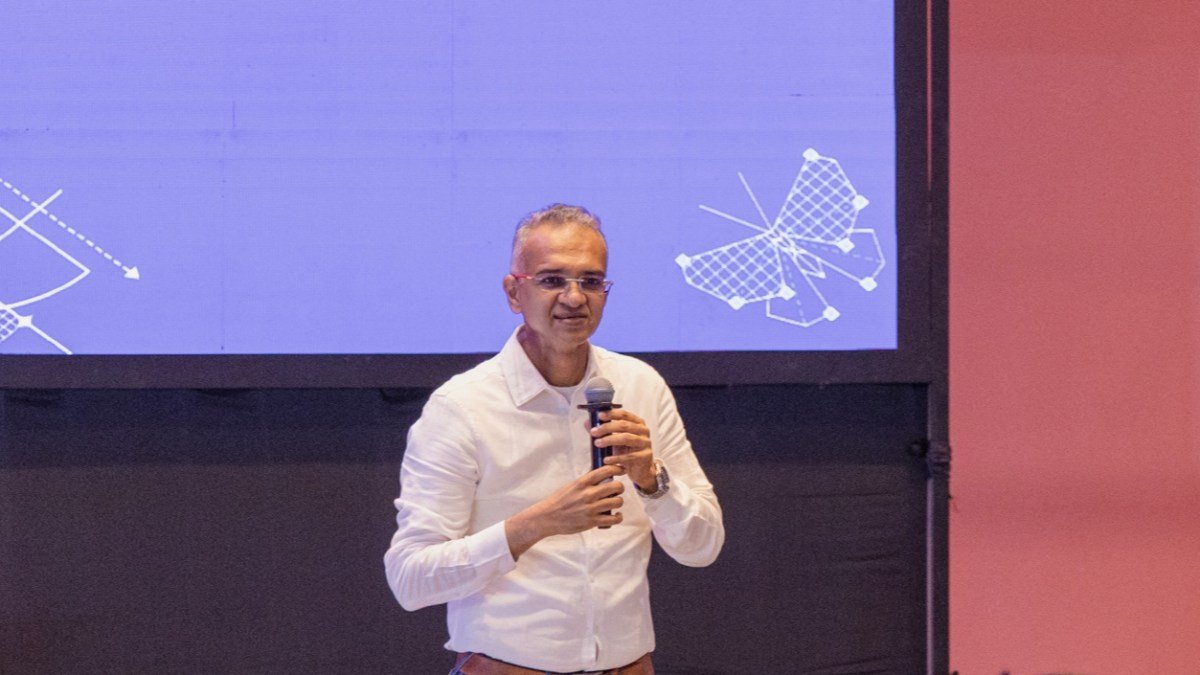
To scale India’s digital transactions past one billion daily, National Payments Corporation of India (NPCI) CEO Dilip Asbe revealed at Mumbai Tech Week 2026 that artificial intelligence will drive the next phase of Unified Payment Interface (UPI) expansion by targeting fraud detection, multilingual voice onboarding, and credit distribution.
Currently processing over 750 million transactions every day, India’s flagship digital payment ecosystem is preparing for its next massive growth spurt. Speaking with TechCrunch, Asbe emphasized that a collaborative effort between the NPCI, the Reserve Bank of India (RBI), and the federal government will be essential to onboarding the next 500 million UPI users.
How AI Will Unlock UPI’s Next 500 Million Users
According to Asbe, integrating artificial intelligence is no longer optional but a core requirement for the payment network’s evolution. The technology will be deployed across multiple critical areas to safeguard the network and simplify user acquisition.
“AI will be used very effectively when we look at the next wave of UPI, and that includes all aspects, including reaching new users. We must use AI effectively to protect our current citizens, to find fraud, and to find mules. AI must also be used to provide credit to all the users and merchants who have digital footprints,” Asbe stated. “We must use AI to look at the voice and multilingual solutions to make onboarding simpler.”
While voice-based interfaces are frequently discussed as the key to unlocking rural and semi-urban markets in India, Asbe admitted the technology is still in its infancy. Voice models require higher accuracy before they can handle financial transactions seamlessly. Although the NPCI introduced a voice assistant-based interactive system in 2023, mainstream adoption has been slow. However, Asbe remains confident that identifying the right localized use cases will eventually establish voice as a pillar of the payment ecosystem.
Regulating AI in Finance and the Rise of Custom Models
In the United States, fintech startups and established public companies are aggressively integrating AI into consumer finance. Platforms like Coinbase and Robinhood are experimenting with AI agents capable of trading on behalf of users, while OpenAI allows users to sync personal financial data with ChatGPT for customized advice. While NPCI showcased agentic commerce and payment prototypes with Razorpay last year, a widespread public rollout has yet to occur.
For India to safely adopt AI-driven financial services, Asbe stressed the necessity of a robust regulatory framework. Such a system must prioritize consumer protection, mitigate systemic risks, and maintain clear audit trails of user consent and instructions provided to AI agents in case of transaction disputes.
Beyond adopting third-party models, Asbe pointed out that the Indian financial sector is uniquely positioned to develop localized Small Language Models (SLMs).
var playerInstance_jwplayer_6a69105e9141d = jwplayer( “jwplayer_6a69105e9141d” );
playerInstance_jwplayer_6a69105e9141d.setup({
playlist: “https://cdn.jwplayer.com/v2/media/nsQAyeWN”,
});
“We believe that the models will differentiate from each other based on the datasets that are made available to them,” Asbe explained. “We have a very rich dataset in our ecosystem. I think there is a big opportunity for Indian companies — the banks, fintechs, and the ecosystem — to create small language models which are sharp, specific, and as deterministic as possible.”
The NPCI has already taken steps in this direction. Last year, the organization rolled out FIMI, a specialized AI language model designed for payments. FIMI currently assists over a million users in resolving transaction disputes, canceling mandates, and troubleshooting issues, demonstrating rapid scalability.
Breaking the Duopoly: The Battle for UPI Market Share
Despite the NPCI’s efforts to foster a diversified and competitive landscape, Walmart-backed PhonePe and Google Pay continue to dominate the market, commanding over 80% of all UPI transactions. To mitigate concentration risk, the regulator proposed a 30% market share cap on individual payment apps. Originally delayed, this policy is now scheduled to take effect on December 31, 2026.
Asbe noted that switching costs between UPI apps are exceptionally low since core features are standardized across the board. The current market dominance of PhonePe and Google Pay is the result of millions of dollars in sustained marketing and infrastructure investments. According to Asbe, the key to unlocking market share for newer players lies in financial viability.
“I believe that there are multiple issues why we see this concentration risk exist, and one of the important reasons is the availability of a viable commercial model. The moment we see the commercial model being available to the ecosystem, I believe newer players will start investing very heavily,” Asbe said.
In an effort to stimulate competition, the NPCI spun off its BHIM UPI app into a wholly-owned subsidiary in 2024. Although BHIM’s transaction volume has increased, its market share remains at roughly 1%. Asbe clarified that the NPCI is not chasing a specific market share target for BHIM, but rather aims to position it as a secure, sovereign alternative to private applications.
As India continues to cement its status as a global digital economy leader, international investors are closely monitoring these regulatory shifts to identify high-growth opportunities in a highly competitive fintech landscape.