
Venice AI Becomes $1B Unicorn on Privacy Demand
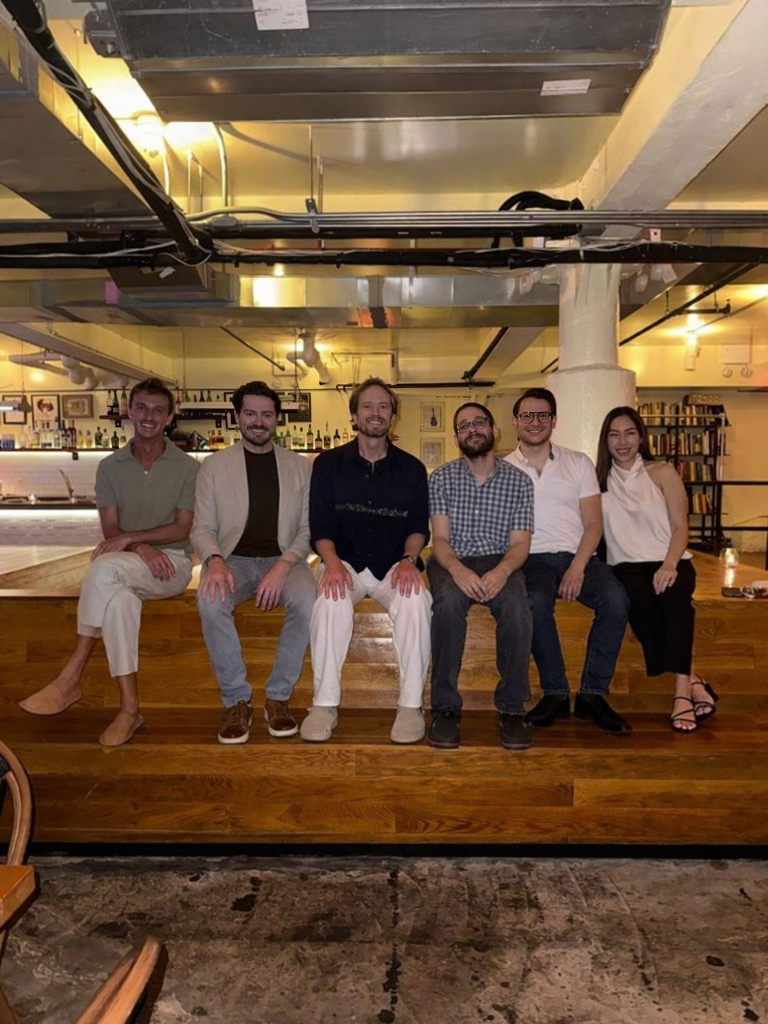
Privacy-first startup Venice AI officially achieved unicorn status on Wednesday after securing a $65 million Series A funding round at a $1 billion valuation, driven by soaring global demand for uncensored, secure artificial intelligence.
While safety concerns regarding mental health, harassment, and misinformation have forced mainstream AI developers to impose strict guardrails, consumer demand for unrestricted AI remains massive. Users want to tap into the full potential of large language models without tech conglomerates dictating what they can ask—and they want their personal data protected.
Enter Venice AI. By offering access to over 200 AI models while guaranteeing total user privacy, the young company has experienced explosive growth. Within just two years, the platform has attracted over 850,000 unique web visitors, boasts more than 3 million active users, and processes an average of 1.7 million API calls daily.
How Venice AI Protects User Privacy
The startup runs “uncensored,” open-source models directly on its own hardware while securely routing queries to closed-source options from giants like OpenAI and Anthropic. To ensure complete anonymity, all user prompts are encrypted on the client side, sent through an external proxy, and processed without Venice storing any data on its servers. For users seeking ultimate security, end-to-end encryption is available via a paid subscription tier.
Unprecedented Growth and $70M Revenue
This privacy-centric approach is proving highly lucrative. In an exclusive interview, CEO Erik Voorhees revealed that Venice AI is already profitable, generating an annualized run-rate revenue exceeding $70 million.
This rapid commercial traction quickly caught the attention of venture capitalists. The company’s $65 million Series A round—its very first external fundraise—was led by crypto-native venture firm Dragonfly, with participation from Coinbase Ventures, North Island Ventures, and other prominent backers.
The Crypto Connection and Erik Voorhees’ Vision
The involvement of web3 investors aligns perfectly with Voorhees’ long-standing advocacy for digital privacy and decentralization. As an early Bitcoin pioneer, Voorhees previously founded the Bitcoin-based gambling platform Satoshi Dice and the non-custodial cryptocurrency exchange ShapeShift.
Voorhees has consistently defended the right to privacy, even under regulatory pressure. For instance, when a Wall Street Journal investigation accused ShapeShift of processing illicit funds during its no-KYC (Know Your Customer) era, Voorhees maintained that individual identities should not be systematically recorded just to catch occasional bad actors.
A ‘Neutral Tool’ Philosophy for AI Safety
Voorhees applies this same philosophy to artificial intelligence. When questioned about the potential dangers of unrestricted AI—such as instances of AI-induced psychological harm—he explained that Venice AI operates strictly as a neutral utility.
“This is the same principle that you have in Bitcoin, where Bitcoin, as a neutral protocol, works the same way for all people,” Voorhees said. “I think it’s actually quite dangerous from a safety perspective, for the world to enter this next phase and have everyone be constantly watched. To me, that is actually much more dangerous than any particular person asking a controversial question or something that might be considered bad.”
Uncensored Models, Tokenomics, and Future Outlook
Venice AI prioritizes user autonomy by letting individuals choose from a vast selection of text, image, audio, and video generation models. These models vary in performance and censorship levels, and the platform features customizable AI “characters” for an entirely uncensored interactive experience.
“We’re optimizing for freedom and actually respecting users as adults, which is, I think, rare these days,” Voorhees said. He noted that while Venice works on modifying system prompts for open models to encourage less restricted answers, it does not impose artificial limitations on them.
The platform also integrates web3 mechanics through two native tokens. In January, Venice introduced the “VVV” token to drive user acquisition, following the launch of the “DIEM” token last August. Users can stake VVV to mint DIEM, which yields $1 in daily AI credits. Despite these crypto integrations, only about 8% of Venice’s user base currently pays with cryptocurrency.
Voorhees attributes the platform’s rapid expansion to both token performance and reaching near-feature parity with market leaders like ChatGPT. While Venice initially relied solely on its privacy appeal, it now matches the capabilities of mainstream alternatives, making it a highly competitive choice. Moving forward, Venice AI plans to allocate its new capital toward purchasing GPUs and constructing proprietary data centers, transitioning away from leased hardware to boost gross margins.