
Super.money Teams Up With Kotak811 to Monetize Free UPI
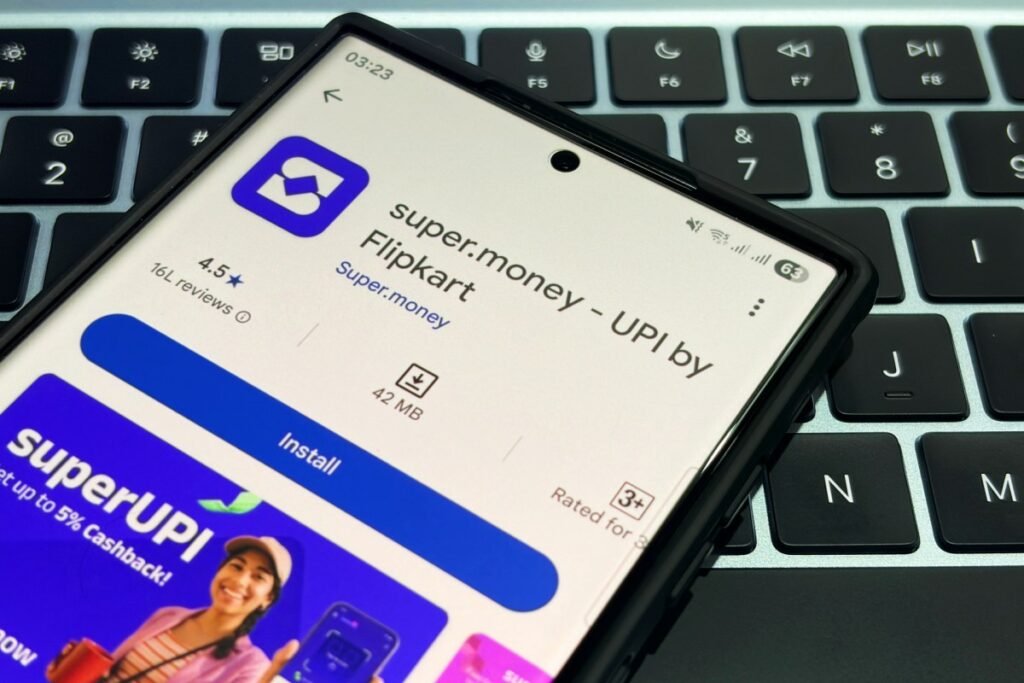
Flipkart’s fintech subsidiary, Super.money, has joined forces with Kotak Mahindra Bank’s digital arm, Kotak811, to launch a unified financial account in India designed to monetize the country’s massive, zero-fee Unified Payments Interface (UPI) ecosystem.
Ambitious Growth Targets and the Path to Profitability
The newly formed alliance is aiming for aggressive expansion, targeting the issuance of 2 million secured credit cards over the next 12 months—with roughly 60% earmarked for first-time borrowers—and scaling up to 5 million cards within two years. Super.money, which currently boasts a user base of 10 million active customers, projects that this partnership with Kotak811 will generate approximately 10% of its total revenue next year as the company steers toward profitability by 2026, according to chief executive Prakash Sikaria.
Launched in June 2024 as the latest financial venture from Walmart-owned Flipkart following the spin-off of PhonePe in late 2022, Super.money is already experiencing rapid growth. The fintech platform is currently generating about $3 million in monthly revenue, representing an annualized run rate of approximately $36 million.
Furthermore, the app has quickly established itself as one of India’s top five UPI platforms, processing over 200 million transactions monthly for four consecutive months ending in August, according to data from the National Payments Corporation of India (NPCI).
Diversified Revenue Streams and Demographics
Currently, Super.money’s revenue model is heavily driven by credit products. Personal loans account for about 80% of total revenue, while credit cards and payment services (such as utility bill payments and mobile recharges) contribute 10% each. The platform enjoys a high user retention rate of approximately 85%, with a highly engaged demographic where 60% to 70% of transactions are driven by users under the age of 30.
“We operate a business model supported by two distinct monetization engines,” Sikaria explained. “The first is our core financial services engine, which includes personal loans, credit cards, and deposits. The second is commerce. Our long-term vision is to integrate a Klarna-style ‘pay-in-three’ option on top of transactions, establishing a financial overlay that enables customers to buy now and pay later seamlessly within our ecosystem.”
Cracking the Code of India’s Zero-Fee UPI System
India’s government-backed UPI platform has revolutionized the digital payments landscape by making instant, bank-to-bank transfers entirely free. The network currently processes more than 19 billion transactions every month. However, this massive volume has historically yielded very little profit for fintech companies because regulatory authorities, including the Indian finance ministry, do not allow the merchant fees that traditionally fund credit card rewards and loyalty programs.
Super.money is attempting to bypass this hurdle by bundling secured credit cards and interest-bearing savings accounts to reintroduce financial incentives. This strategy could serve as a blueprint for other fintech firms looking to build sustainable business models on top of zero-fee public payment systems.
“We don’t offer UPI simply to solve a basic payments need,” Sikaria said. “Instead, we utilize UPI as a highly effective customer acquisition and retention tool to build a comprehensive, cross-selling financial services ecosystem.”
Inside the ‘3-in-1 Super Account’
The strategic partnership with Kotak Mahindra Bank—India’s fourth-largest lender by market capitalization—provides Super.money with a robust, regulated banking infrastructure. This move follows a previous collaboration with Utkarsh Small Finance Bank to offer secured cards, marking the fintech’s deeper expansion into mainstream consumer banking.
The cornerstone of this new partnership is the “3 in 1 Super Account,” which integrates a savings account, UPI payment capabilities, and a secured credit card backed by a fixed deposit (FD).
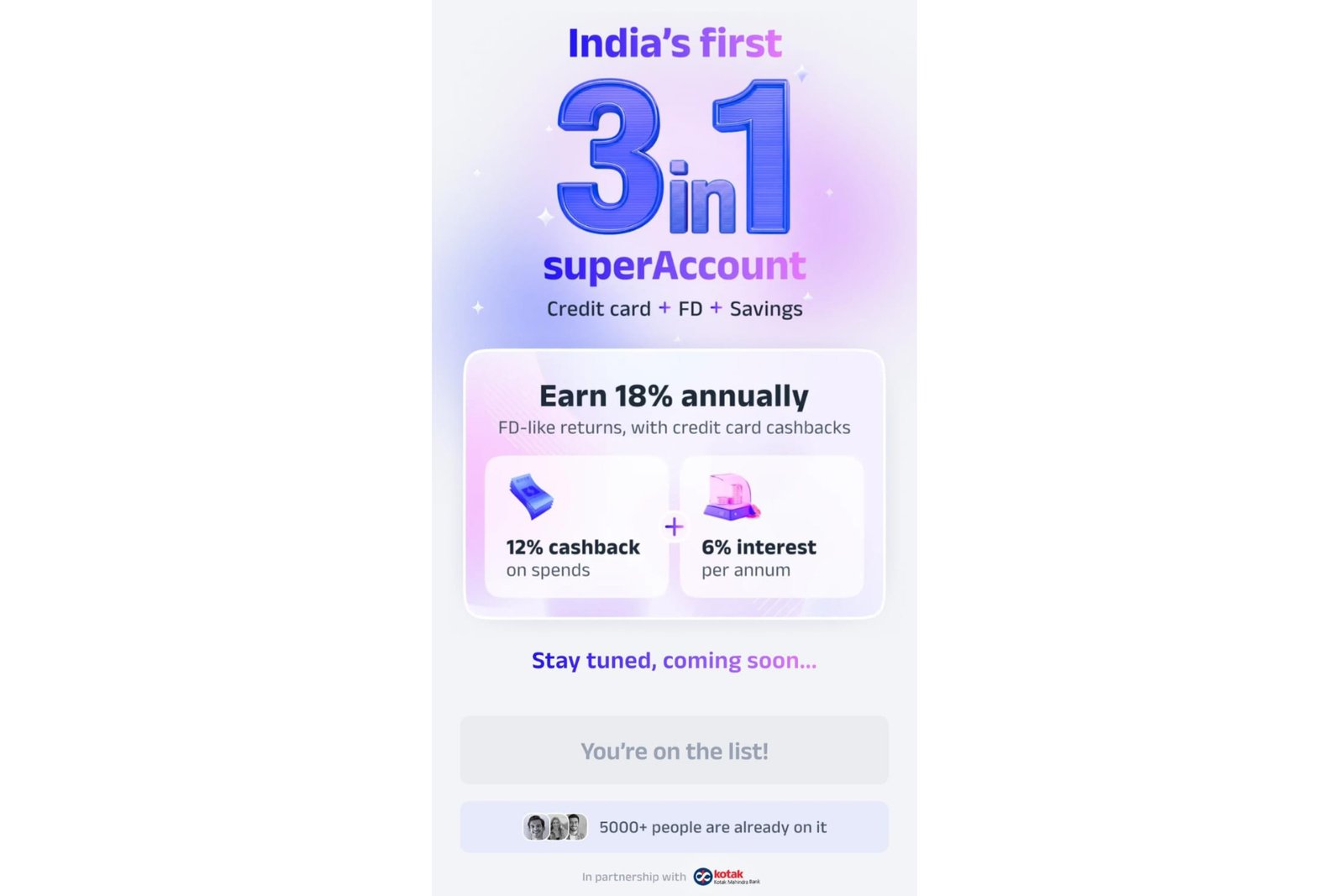
To open the account, users must make a minimum fixed deposit of ₹1,000 (approximately $11). The account earns interest on this deposit while providing cashback incentives on transactions. Additionally, it features a “UPI-on-credit” facility, which acts as a credit line backed by the deposit, requiring no formal proof of income.
Sikaria noted that secured credit cards were deliberately selected as the anchor product because they operate cleanly within the boundaries of India’s zero-fee payment rules while allowing the platform to offer the rewards and cashbacks consumers expect.
“Our objective is to attract high-value users who are highly likely to adopt our broader suite of financial products,” Sikaria added. “UPI is our primary hook. If a user has no interest in engaging with our financial services or other product offerings, we do not actively seek to serve them solely for basic payments.”
Strategic Merchant Alliances and Capital Requirements
The Kotak Mahindra Bank integration follows another major product launch: a partnership with SoftBank-backed Juspay to introduce a streamlined, one-click checkout experience tailored for online direct-to-consumer (D2C) brands.
Approximately 1,000 merchants have already integrated this checkout solution, and Super.money plans to scale this B2B network by targeting more D2C brands alongside existing merchant channels within the Flipkart ecosystem.
Monetization from the secured cards is driven by merchant discount rate (MDR) revenue on transactions, which directly funds the consumer cashbacks. “We also receive a standard customer acquisition fee from our partner bank, which serves as an additional revenue stream for us,” Sikaria explained.
Super.money plans to scale card issuance to approximately 200,000 secured cards per month under the Kotak partnership before expanding the program to other banking institutions.
To date, parent company Flipkart has invested around $50 million to fund Super.money’s early-stage operations. As the business continues to scale, the fintech firm is preparing to secure additional capital, potentially opening up funding rounds to external venture investors.
“We will require additional capital to fund our growth over the next couple of years,” Sikaria stated. “We will soon begin structuring our formal capital-raising strategy.”
While he did not specify whether the upcoming funding round would be led by Flipkart or external venture capital firms, Sikaria mentioned that Super.money is already receiving significant inbound interest from institutional investors.
In terms of financial sustainability, the company is maintaining a disciplined approach to spending, keeping its monthly cash burn at a low single-digit million dollar figure.
Rather than engaging in a costly market-share war with mass-market UPI giants like Google Pay and PhonePe, which target hundreds of millions of users, Super.money is focusing its efforts on India’s top 10 million to 30 million affluent digital consumers.
“Our goal is to build a highly robust, profitable secured card franchise that delivers clear financial value to our customers, our partner banks, and our own bottom line,” Sikaria concluded.