AI Will Let Anyone Launch a Restaurant in 60 Seconds
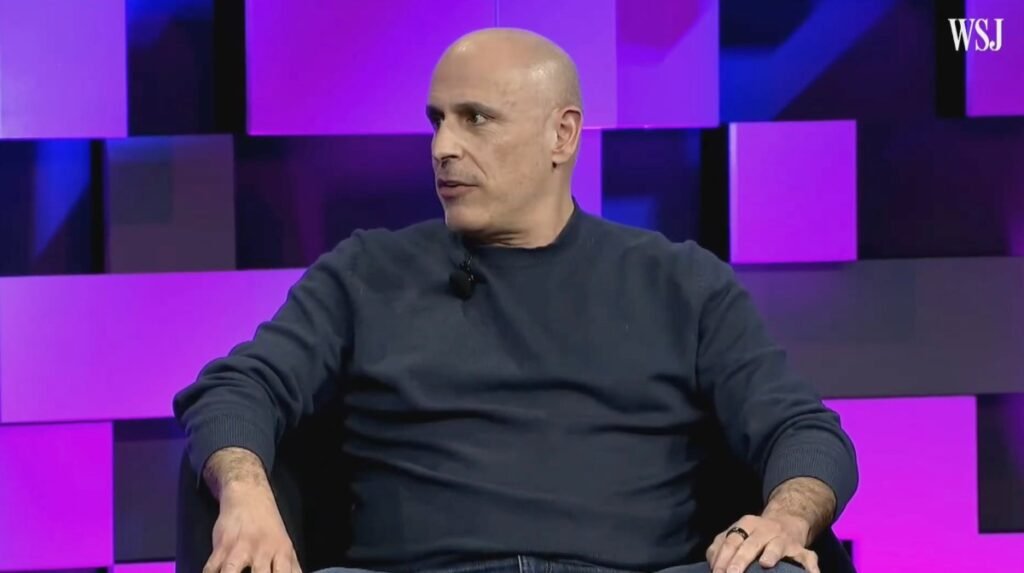
This week at The Wall Street Journal’s Future of Everything conference, e-commerce pioneer Marc Lore announced that his food-tech startup, Wonder, will launch an AI-powered initiative called Wonder Create to allow anyone to design and deploy a virtual restaurant brand in under a minute across its rapidly expanding network of automated kitchens.
How Wonder Create Uses AI to Build Brands Instantly
Lore, who previously sold his startups to Amazon and Walmart, described the new platform as a “Shopify front end with an AI prompt.” Users simply type in the type of culinary concept they want to build. Within 60 seconds, the generative AI engine designs the restaurant’s name, branding, logo, descriptions, images, pricing, nutritional information, and complete recipes. Aspiring restaurateurs can refine their prompts until satisfied before pushing the brand live.
The Wonder Create platform, which was first announced earlier this year, targets a wide range of creators looking to experiment with food. Established chefs can test new recipes to gauge consumer demand before introducing them to physical locations, while digital creators can monetize their audiences without the overhead of physical real estate.
“It could be a mega-influencer, a micro-influencer — anyone that wants to monetize their following,” Lore explained. “Or it could be a private trainer who wants to make specific bowls. It could be a non-profit. It could be Disney marketing their new movie. Anybody can make a restaurant.”
Inside the “Programmable” Robotic Kitchens
Once launched, these virtual brands operate within Wonder’s physical footprint, which has transitioned from mobile food trucks to compact, 10-to-20-seat fast-casual locations. Lore refers to these spaces as “programmable cooking platforms.” Thanks to highly automated, all-electric setups, a single location can prepare menus for up to 25 different restaurant brands simultaneously.
Speaking at the WSJ event, Lore explained that these kitchens utilize a massive 700-ingredient library. While they employ up to 12 human workers, the heavy lifting is increasingly handled by advanced automation. Wonder just bought Spice Robotics, a company known for its automated bowl-assembling technology. Additionally, Wonder plans to roll out an “infinite sauce machine” next year capable of replicating roughly 80% of all sauce recipes found on the internet.
Massive Scaling and Unprecedented Efficiency
Wonder currently operates 120 of these high-tech kitchens, with plans to scale to 400 locations by next year. Rather than cutting jobs, Lore emphasizes that the integration of robotics is designed to supercharge output.
“We have about 7 million throughput capacity with 12 people,” Lore stated. “We see a path to getting to 20 million throughput out of 2,500 square feet with just 12 people.” By 2035, the company aims to host 1,000 unique virtual restaurants operating out of a single 2,500-square-foot facility.
Overcoming the Historic Pitfalls of Ghost Kitchens
Whether there is sustained demand for this model remains to be seen. The ghost kitchen industry faced severe headwinds in the early 2020s, with many operators shutting down due to a failure to build customer loyalty. A prime example is MrBeast Burger, which suffered from inconsistent food quality because it relied on dozens of different third-party contracted kitchens.
Wonder aims to bypass these quality control issues by standardizing production through its proprietary, automated kitchens. However, limitations remain. Lore admitted that Wonder’s robotic systems cannot perform complex culinary tasks like stretching pizza dough or rolling sushi. Instead, the platform focuses on simpler, highly replicable items like burgers, chicken wings, fried chicken, and grain bowls.
The Strategic Rollup: Grubhub, Blue Apron, and Brand Arbitrage
This AI initiative is the latest piece in Lore’s broader food-delivery ecosystem, which already includes Grubhub (processing 250 million deliveries annually) and meal-kit provider Blue Apron. Wonder is also aggressively acquiring established brands, such as New York’s Blue Ribbon Fried Chicken, purchased for $6.5 million in February.
“When you buy a brand — and you can buy a brand that has 10 locations, or even 50 locations — and then overnight put it in 1,000, there’s just an incredible arbitrage there,” Lore noted.