
Alaan Bags $48M in One of MENA’s Largest Series A Rounds
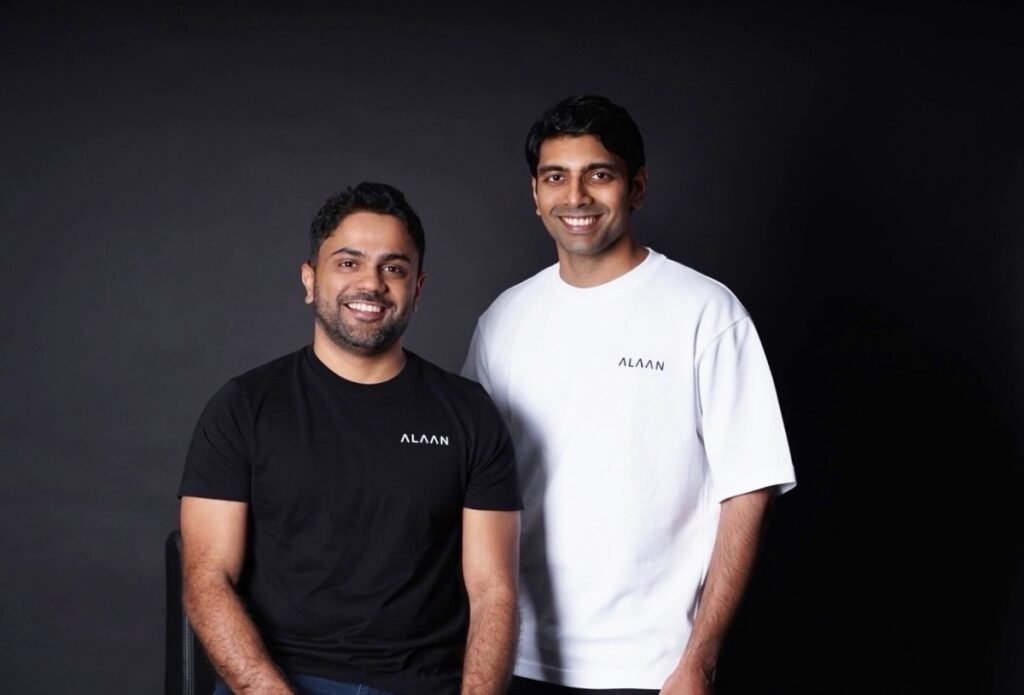
Dubai-based spend management platform Alaan secured a massive $48 million Series A funding round today to accelerate its AI-driven financial automation and expand operations across the Middle East.
From Corporate Pain to Financial Revolution
The inspiration for Alaan came from firsthand operational frustration. While working as a consultant at McKinsey’s Dubai office, Parthi Duraisamy realized that the American Express corporate cards his firm relied on were rarely accepted across the Middle East. This limitation forced Duraisamy and his colleagues to pay for substantial business expenses out of pocket, leading to a tedious cycle of manual expense reports.
“It was a constant pain,” Duraisamy recalled. “I would spend my weekends uploading receipts and manually reconciling every single expense.”
Driven to solve this inefficiency, Duraisamy teamed up with fellow McKinsey alumnus Karun Kurien to launch Alaan. Today, the startup has evolved into the Middle East’s leading spend management platform.
Securing One of MENA’s Largest Series A Rounds
The newly announced $48 million Series A funding round was led by Peak XV Partners (formerly Sequoia Capital India & SEA). The round also saw participation from prominent investment firms, including 885 Capital, Y Combinator, 468 Capital, and Pioneer Fund.
Notably, founders of some of Alaan’s own unicorn clients joined the round as investors, including Hosam Arab (Tabby), Mudassir Sheikha (Careem), and Khalid Al Ameri, a highly influential regional content creator.
This transaction stands out as one of the largest Series A investments ever recorded for a fintech company in the MENA region. For comparison, Saudi Arabia’s prominent buy now, pay later platform Tamara, which raised $110 million a few years ago, remains one of the few to surpass this scale at an early stage.
“The category has demonstrated strong product-market fit in the MENA region, and Alaan stands out as the category leader,” stated GV Ravishankar, managing director at Peak XV. “Their customer-centric and product-led mindset has enabled them to build solutions tailored to modern finance teams.” Peak XV has been highly active in the region, having also backed the UAE-based proptech firm Huspy in a major Series B round last month.
Navigating Complex Regulatory Waters in the Gulf
Despite its current leadership position, Alaan’s path to success required overcoming significant regulatory hurdles. Although the company raised a $2.5 million seed round in mid-2021, regulatory complexities and the necessity of securing banking partnerships in the UAE delayed its launch by nearly a year.
var playerInstance_jwplayer_6a6950be0d349 = jwplayer( “jwplayer_6a6950be0d349” );
playerInstance_jwplayer_6a6950be0d349.setup({
playlist: “https://cdn.jwplayer.com/v2/media/nsQAyeWN”,
});
Expanding into Saudi Arabia presented similar roadblocks. It took years of negotiations and compliance audits to secure the necessary approvals from the Saudi Central Bank (SAMA) before Alaan could finally go live in the Kingdom this past January.
“The biggest challenge we faced, both in the UAE and Saudi Arabia, was simply going live,” Duraisamy admitted.
Pioneering Innovation and Pivoting to Silent AI
While regulatory approvals took time, Alaan moved rapidly in product development. The fintech made waves by becoming the first to integrate Apple Pay into B2B corporate cards in the region—a feature previously unavailable to local finance teams.
In early 2023, Alaan also became the first Middle Eastern fintech to integrate OpenAI’s GPT models into its platform. Initially, the company launched a conversational chatbot, expecting users to interact directly with it regarding their corporate spend. However, the chatbot failed to gain significant customer traction.
Recognizing this shift in user behavior, Alaan pivoted its AI strategy. Instead of a front-facing chatbot, the company integrated AI quietly into the background. This subtle automation proved highly successful, streamlining tedious processes such as automated receipt matching, transaction reconciliation, and VAT extraction. The VAT tool is particularly crucial in the Gulf, where navigating complex tax regulations and reclaiming eligible VAT is a major pain point for businesses.
Explosive Growth and Proven Unit Economics
This strategic pivot has paid off. Alaan reports that its spend management platform has saved regional finance teams over 1.5 million hours of manual administrative labor, a figure projected to rise as automation capabilities expand.
Since its commercial debut in 2022, Alaan has processed more than 2.5 million transactions for over 1,500 finance departments. Its client roster includes major regional enterprises such as G42, Careem, Tabby, and the Lulu Group.
Crucially, Alaan has achieved profitability. Duraisamy revealed that the startup spent just $5 million in capital to generate $10 million in recurring revenue. He credits Y Combinator and his mentors for instilling a disciplined, capital-efficient operational model, contrasting with the high-burn strategies common among transaction-volume-focused fintechs.
Scaling in Saudi Arabia and Future Outlook
Alaan is now focused on replicating its UAE success in Saudi Arabia. Since its January launch, the company has doubled its transaction volumes month-over-month for six consecutive months.
The $48 million Series A capital injection will fund this rapid expansion, allowing Alaan to scale its sales, customer success, and compliance teams while doubling down on proprietary AI agents designed for advanced financial automation.
With US-based spend management giant Ramp experiencing explosive valuation growth, the appetite for fintech solutions remains high. However, Duraisamy emphasizes that Alaan’s funding success is rooted in its own metrics rather than global market trends.
“When speaking with investors, what truly matters at our stage is fundamentals: capital efficiency, revenue generation, and a strong go-to-market motion,” Duraisamy explained. “Unlike the US or Europe, size alone isn’t an automatic advantage in this market. Regardless of global trends, we raised this capital because our business fundamentals are incredibly strong.”