
Handwave Challenges Amazon with EU Palm Payments
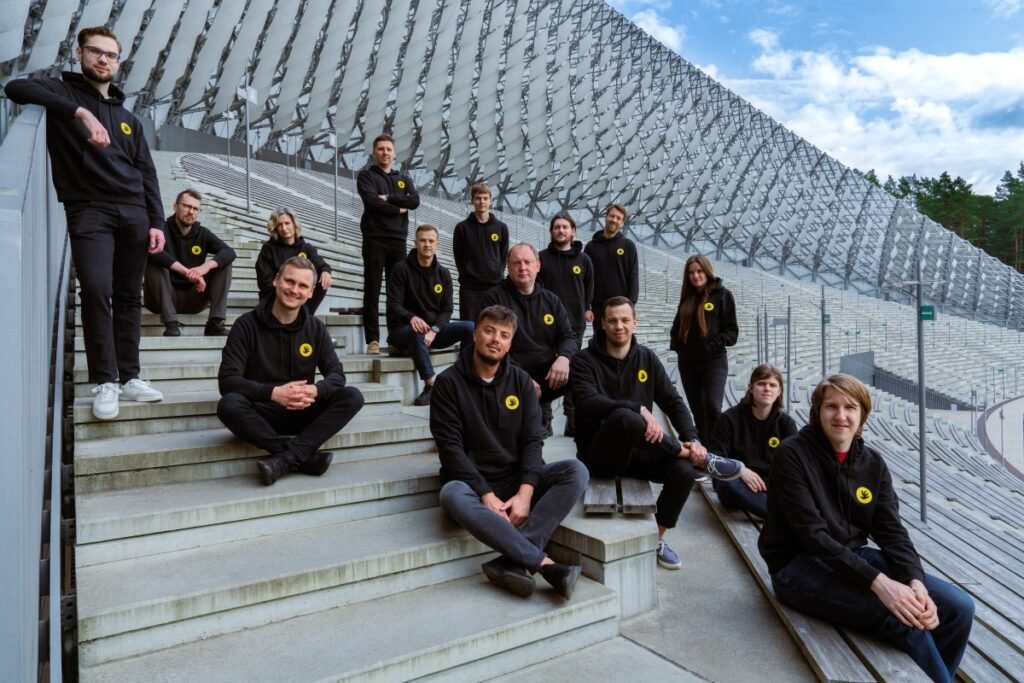
Latvian fintech startup Handwave has secured $4.2 million in seed funding to challenge Amazon’s biometric dominance by launching its independent palm-scanning retail checkout system across Europe.
The Rise of Biometric Palm Payments
Paying with a simple wave of your hand is transitioning from science fiction to everyday retail reality. Amazon’s contactless palm recognition service, Amazon One, has already been utilized more than 8 million times, according to the tech giant. However, this technology remains heavily concentrated within Amazon’s ecosystem, appearing in its own brand stores and over 500 U.S. Whole Foods Market locations, compared to just 150 third-party venues.
This gap has opened the door for independent fintech startups like Latvia-based Handwave. The company aims to provide physical retailers with an alternative biometric solution, capitalizing on the growing consumer familiarity with palm payments. Meanwhile, global adoption is accelerating elsewhere, notably in China, where Tencent is actively working to bring its Weixin Palm Pay service into mainstream use.
How Palm Scanning Secures Transactions
Similar to Apple’s Face ID, modern palm scanning relies on more than just static images. The technology analyzes unique internal palm vein patterns and verifies blood flow to ensure a live user is physically present during the scan. While competitors like Keyo apply this biometric security to building access and identity verification, Handwave is focusing its software and hardware exclusively on the retail sector.
After three years of development, the Latvian startup has created its own proprietary hardware and software suite. Handwave is now preparing to launch retail store pilots to test its palm-scanning devices in real-world merchant environments.
Lower Fees and Seamless Checkout for Retailers
Merchants integrating Handwave’s technology will pay a transaction fee that the startup claims will be highly competitive, matching or beating standard payment processing rates. By streamlining the checkout process, retailers can lower operational costs while improving customer convenience. The system operates entirely without physical cards, mobile apps, fingerprint scanners, or facial recognition, while still supporting loyalty programs and automated age verification.
Co-founders Janis Stirna (CEO) and Sandis Osmanis-Usmanis bring deep industry experience to the venture, having previously worked at Worldline, one of the world’s largest payment processors. Despite these roots, the founders want to maintain an open ecosystem. Stirna noted that the company plans to partner with any willing financial institution or acquiring bank rather than aligning with a single provider.
So far, Handwave has established partnerships with a select group of major European financial institutions. Additionally, Chief Revenue Officer Oskars Laksevics confirmed that the startup signed an agreement with Visa this summer, a move expected to accelerate the international deployment of Handwave’s payment terminals.
var playerInstance_jwplayer_6a69510bcf0c6 = jwplayer( “jwplayer_6a69510bcf0c6” );
playerInstance_jwplayer_6a69510bcf0c6.setup({
playlist: “https://cdn.jwplayer.com/v2/media/po41mlAK”,
});
Why Starting in Europe Gives Handwave an Edge
While the company plans to target the United States eventually, Laksevics believes launching in the European Union provides a strategic advantage. Operating under the EU’s strict regulatory framework allows the company to prove its compliance standards before expanding globally.
Remaining an independent European entity also positions Handwave defensively against larger competitors. This independence is crucial as Amazon seeks to license Amazon One to third parties, and financial giants like JP Morgan test its own palm payment experiment in sports and entertainment venues.
Pricing is another key differentiator. In response to feedback from financial partners regarding hardware costs, Handwave designed its own proprietary algorithms and physical scanners in-house, significantly lowering the manufacturing cost compared to existing market alternatives.
Securing $4.2 Million in Seed Funding
Operating out of Riga, Latvia, allowed the startup to stretch its early-stage capital. Handwave’s initial research and development phase was funded through bootstrapping, a $780,000 angel round, and $267,000 in non-equity grants. This non-equity capital included an EU-funded cybersecurity grant, support from the LIAA Business Incubator, and the EU-backed accelerator program Ready2Scale.
To fund its upcoming pilot programs and secure necessary regulatory certifications, Handwave raised a $4.2 million seed round. The investment was led by Vilnius-based venture capital firm Practica Capital, with participation from regional Baltic funds FirstPick, Outlast Fund, and Inovo.vc.
Leveraging Baltic Fintech and Tech Talent
The Baltic region has grown into a notable fintech hub, offering access to highly specialized scientific and artificial intelligence talent at a fraction of the cost found in Silicon Valley. Stirna highlighted that the region’s unique technical challenges make it highly attractive to top-tier local engineers looking for complex problems to solve.
This technical ambition is what attracted Laksevics to leave his role as a senior marketing executive at Baltic bank Luminor Bank to join Handwave. The company is now positioned to test whether merchant and consumer demand will support the widespread adoption of independent palm-based biometrics at checkout.