
Airbnb AI Now Handles a Third of US Customer Support
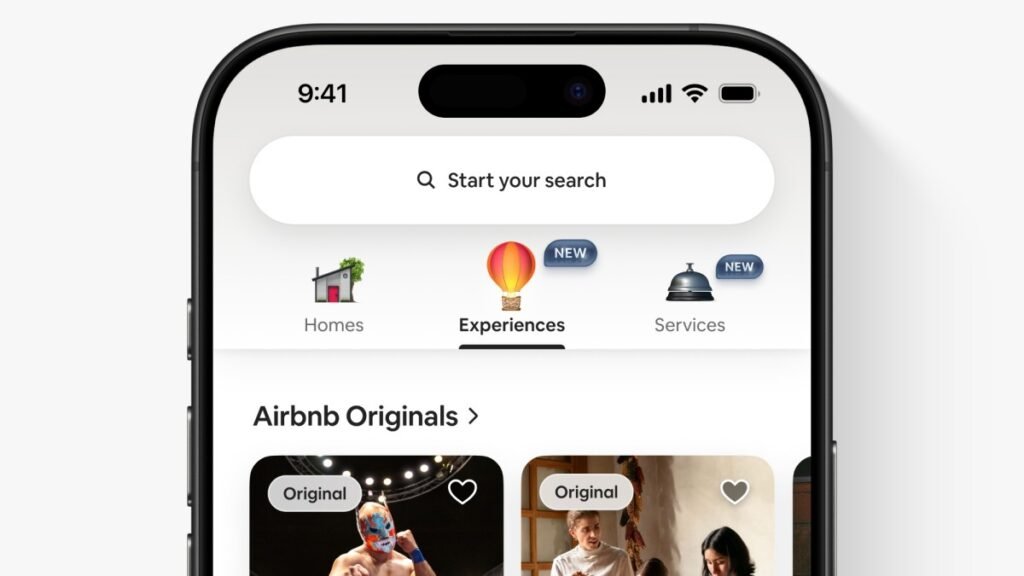
Airbnb announced during its fourth-quarter earnings call this week that its custom-built AI agent is now handling roughly one-third of customer support issues in the United States and Canada to cut operational costs and elevate service quality.
The San Francisco-based lodging giant is already preparing to roll out this proprietary technology on a global scale. If the expansion succeeds, Airbnb projects that within a year, more than 30% of its total customer support tickets worldwide will be managed by AI voice and chat systems, spanning every language currently supported by its human customer service agents.
Global AI Expansion and Cost Reduction
“We think this is going to be massive because not only does this reduce the cost base of Airbnb customer service, but the quality of service is going to be a huge step change,” CEO Brian Chesky stated during the company’s fourth-quarter earnings call. Chesky’s remarks indicate a strong conviction that generative AI can resolve specific customer issues more efficiently and effectively than human agents.
The Mastermind Behind Airbnb’s AI-Native Future
To accelerate this transition, the company highlighted its strategic recruitment of Chief Technology Officer Ahmad Al-Dahle, who was poached from Meta specifically for his deep expertise in artificial intelligence. Under his leadership, Airbnb plans to construct a fully AI-native user experience.
Building an App That ‘Knows’ the User
Chesky explained that with Al-Dahle guiding the technical vision, Airbnb is poised to debut a revolutionary application. Instead of acting as a basic search engine, the upcoming platform will “know” the user dynamically.
“It will help guests plan their entire trip, help hosts better run their businesses, and help the company operate more efficiently at scale,” Chesky said, justifying the aggressive push to secure Al-Dahle. “Ahmad is one of the world’s leading AI experts. He spent 16 years at Apple, and most recently led the generative AI team at Meta that built the Llama models. He’s an expert at pairing massive technical scale with world-class design, which is exactly how we’re going to transform the Airbnb experience.”
Why Generic Chatbots Can’t Compete with Airbnb’s Moat
As legacy tech platforms face potential disruption from generative AI, Airbnb’s executive leadership is emphasizing its proprietary data moat—a barrier that general-purpose AI models cannot easily cross.
“A chatbot doesn’t have our 200 million verified identities or our 500 million proprietary reviews, and it can’t message the hosts, which 90% of our guests do,” Chesky told Wall Street analysts. Rather than fearing third-party AI, Chesky outlined a strategy of layering proprietary AI directly over the existing Airbnb ecosystem to accelerate platform growth.
Strong Financials and Defensive Strategy
This technological pivot comes alongside robust financial performance. Airbnb projected low-double-digit revenue growth for the current fiscal year, following a fourth-quarter revenue performance of $2.78 billion, which came in above estimates of $2.72 billion. For the upcoming quarter, the company forecasts revenue between $2.59 billion and $2.63 billion, outpacing Wall Street expectations of $2.53 billion.
Despite these strong figures, investors questioned whether emerging AI search platforms could threaten Airbnb’s market share by directly entering the short-term rental space. Chesky dismissed these concerns, pointing out that Airbnb is a complex, multi-sided ecosystem rather than a simple search directory. The platform manages host relationships, localized customer support, and robust safety protections like insurance and user verification protocols.
“We’ve built this over 18 years. We handle more than $100 billion in payments through the platform,” Chesky noted.
Furthermore, Chesky argued that AI chatbots currently function as top-of-funnel traffic drivers, similar to search engines. Crucially, traffic originating from these AI platforms converts at a higher rate than traditional traffic from Google, indicating that the broader shift toward AI search will act as a tailwind for Airbnb.
Conversational Search and Internal Engineering Upgrades
Airbnb is already implementing AI-driven search capabilities, currently live for a small percentage of its global traffic as the company experiments with conversational search interfaces. Future updates will also introduce sponsored listings directly into these AI-powered search results.
The company’s internal operations are undergoing a similar AI transformation. While competitors like Spotify recently reported that some of their top developers have relied entirely on AI to write code, Airbnb shared a different metric of internal adoption: currently, 80% of Airbnb’s engineers utilize AI development tools, with the company actively working to reach 100% adoption in the near future.