Kana Exits Stealth With $15M for Flexible AI Agents
San Francisco-based startup Kana emerged from stealth today, securing $15 million in seed funding led by Mayfield to revolutionize the crowded digital marketing landscape with a suite of highly adaptable AI agents. While the market is flooded with automated solutions from tech giants and generative AI startups alike, Kana aims to differentiate itself by delivering autonomous agents capable of handling complex operations, including data analysis, audience targeting, campaign management, media planning, and chatbot optimization.
A Crowded Market Meets Seasoned MarTech Veterans
The marketing technology sector is notoriously saturated. From platform-native AI tools on Facebook, Instagram, TikTok, Google, and Microsoft to specialized content generators like Jasper and Copy.ai, marketers face an overwhelming array of choices. However, Kana enters the arena with a distinct competitive advantage: the deep industry expertise of its founders.
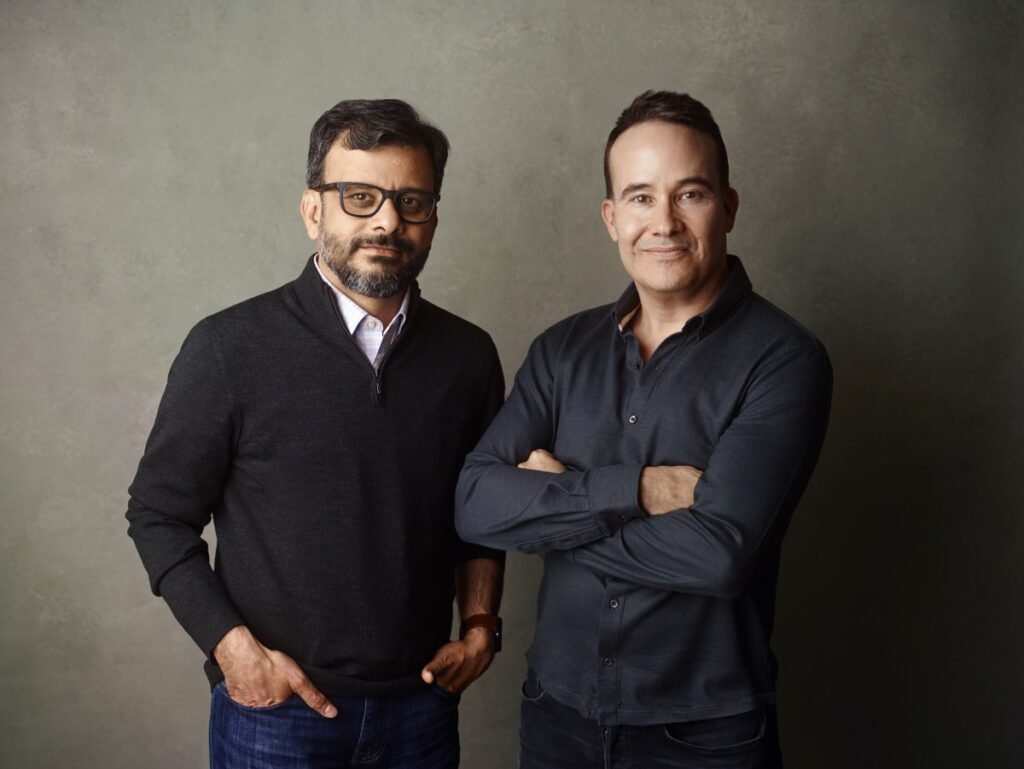
Co-founders Tom Chavez (CEO) and Vivek Vaidya (CTO) have spent over 25 years building enterprise marketing technology. Kana marks their fourth joint venture, following the successful acquisitions of Rapt by Microsoft in 2008 and Krux by Salesforce in 2016. Prior to its public launch, Kana was incubated for nine months within super{set}, the founders’ own startup studio.
According to Chavez, the current technological shift presents a unique opportunity to address long-standing industry pain points. He noted that the market is actively seeking solutions tailored to this specific technological moment, built by teams who deeply understand the operational friction marketers experience daily.
How Kana’s ‘Loosely Coupled’ AI Agents Work
Instead of offering a rigid, one-size-fits-all platform, Kana provides “loosely coupled” AI agents. These agents can be customized in real time and integrated directly into existing legacy marketing software to execute multiple operations simultaneously.
For example, a marketer can upload a standard media brief to the platform. Kana’s agents will automatically analyze the document to define campaign objectives, identify target audiences, and ingest inventory and market research data to refine the strategy. The platform then automates campaign tracking, continuous optimization, and performance reporting.
Synthetic Data and Human-in-the-Loop Control
To enhance audience targeting and market research, Kana integrates synthetic data generation. This capability allows brands to supplement third-party data sources, which reduces data acquisition costs, fills critical information gaps, and enables marketers to run rapid platform tests to identify winning strategies faster.
Crucially, Kana maintains a “human-in-the-loop” architecture. Marketers retain full control to approve agent actions, provide feedback, and recalibrate agent behaviors as business requirements evolve.
The Ultimate Moat: Customization Over Legacy Systems
Chavez and Vaidya believe that the ability to deploy and modify agents on the fly will allow brands to see campaign results much faster than traditional software allows. This flexibility is also positioned as the startup’s primary defense against both agile startups and slow-moving tech incumbents.
Rather than forcing clients to choose between buying rigid off-the-shelf software or building expensive in-house tools, Kana offers a collaborative “build with” model. The founders argue that large enterprise software providers lack the agility to offer this level of deep customization to individual clients.
With the new $15 million capital injection, Kana plans to scale its engineering, product, and go-to-market teams. As part of the funding round, Navin Chaddha, managing partner at Mayfield, will join Kana’s board of directors.