
Revolut Targets ‘Criminal’ Bank Fees in India Launch
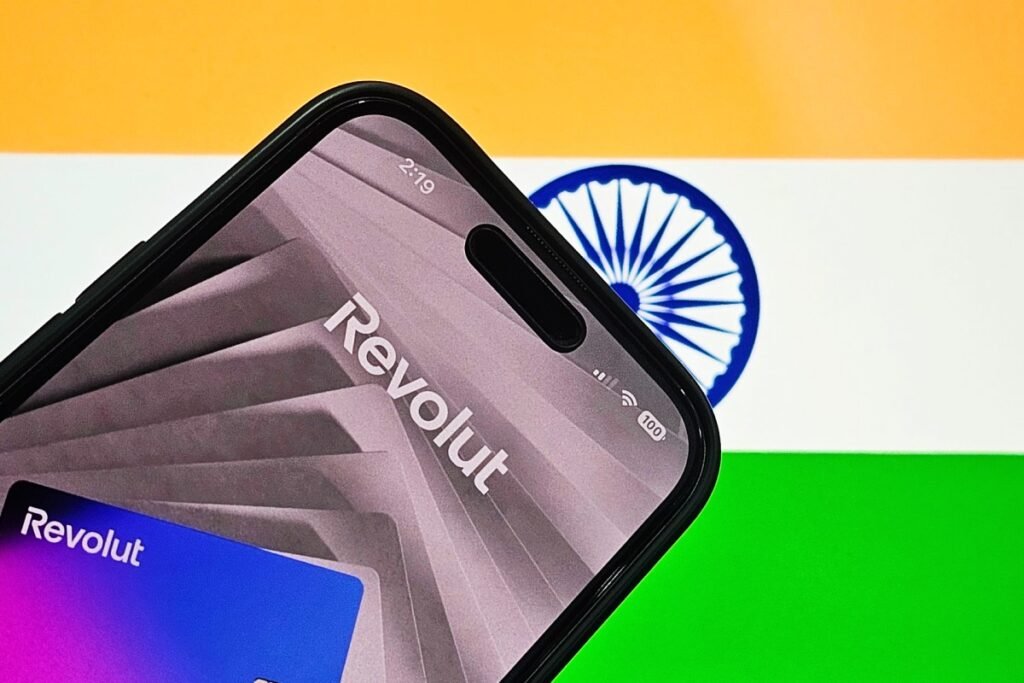
British fintech Revolut is launching its digital banking services in India to disrupt the cross-border payments market and challenge traditional banks over “criminal” foreign exchange fees.
According to Revolut’s estimates, Indian consumers spend approximately $30 billion overseas annually, losing an estimated $600 million to high bank charges. Paroma Chatterjee, CEO of Revolut India, highlighted that foreign exchange has historically been monopolized by traditional financial institutions. She pointed out that consumers face exorbitant charges whether they are purchasing physical foreign currency, obtaining forex from banks, or utilizing bank-issued travel cards for international travel.
Revolut’s Strategic Expansion and Regulatory Milestones
Revolut has been actively preparing for its Indian market entry since 2021. To establish its operational foundation, the London-based fintech acquired Arvog Forex in 2022, securing the necessary licenses to offer remittance and multi-currency accounts. This was followed by a major regulatory milestone in April this year, when the company secured a prepaid payment instrument (PPI) license from the Reserve Bank of India (RBI). This authorization empowers Revolut to issue prepaid cards, host digital wallets, and integrate directly with India’s Unified Payments Interface (UPI).
Targeting India’s Digitally Native Generation
With its regulatory framework in place, Revolut is targeting a demographic of over 150 million “globally aspiring, digitally native” Indians between the ages of 25 and 45. The company has set an ambitious goal to onboard 20 million users by 2030, aiming to process at least $7 billion in transaction volume.
A Customized Suite of Financial Products
Chatterjee emphasized that holding a PPI license allows the company to deliver a highly customized user experience without relying on restrictive bank partnerships. The fintech’s product suite for Indian consumers will include a prepaid wallet featuring domestic UPI support and branded UPI handles, alongside a domestic Visa card and an international multi-currency Visa card. The company also plans to introduce dedicated accounts for kids and teenagers linked directly to parental profiles, subscription-based account tiers, and advanced budgeting and spending analytics tools.
Additionally, Revolut holds the necessary regulatory permissions to facilitate both domestic and international transfers, including same-day outward remittances from India through a localized banking partner.
Prioritizing Full KYC and High-Value Users
Unlike local competitors that often use minimal Know Your Customer (KYC) processes to quickly register low-value users, Revolut is mandating a strict, full-KYC onboarding process. This includes Aadhaar and video verification, alongside cross-referencing new users against global sanctions lists, such as those managed by the United Nations and the U.S. Office of Foreign Assets Control (OFAC).
Chatterjee explained that this rigorous verification process is designed to attract high-intent customers who are genuinely interested in using the platform, rather than inflating registration metrics through casual downloads. She noted that app store downloads driven by curiosity do not define success for the company. Instead, Revolut intends to measure its performance through user engagement and profitability.
Global Valuation and Local Investment
To put its business model into perspective, Chatterjee compared their strategy to Revolut’s global operations. While some Indian platforms boast hundreds of millions of registered users, Revolut operates in 39 countries with 65 million users, yet commands a valuation of $75 billion. This high valuation—which the company announced last month on the back of a secondary share sale—is driven by high engagement, with over 25 million monthly active users generating more than $4 billion in transaction volume and over $1 billion in profit.
Investing in India’s Tech Infrastructure
Ahead of its public launch, Revolut has built a waitlist of over 350,000 Indian consumers, who will be onboarded in phases before the platform opens to the general public. The company is also exploring partnerships with alternative card networks, including the Indian government-backed RuPay system, to offer consumers more choices.
To support its local operations, Revolut has already infused $45 million in India. This funding has been used to set up local operations and entirely localize its technology stack to comply with India’s strict data sovereignty regulations. The company plans to inject additional capital as operations scale.
India already plays a critical role in Revolut’s global structure. Out of its 10,000 global employees, approximately 3,500 are based in India, making it the company’s largest workforce hub—surpassing its headquarters in the United Kingdom.
Despite its massive scale, Revolut will face stiff competition in India’s cross-border payment sector. While traditional banks currently dominate the foreign currency market, established fintech players like Niyo, Scapia, Fi, and BookMyForex are already actively serving Indian travelers and remittance senders.