Noise Empowers Everyday People to Earn as Content Creators
Creators
CONTEUDO:
The marketing platform Noise is revolutionizing the way brands connect with content creators by offering a more affordable alternative to traditional influencer marketing and standard advertising campaigns.
What sets Noise apart is its inclusive approach, allowing a diverse range of creators to participate—anyone can download the app, irrespective of their follower count. The platform provides users with various campaigns to join, enabling them to generate content on their preferred social media channels, including TikTok, Instagram, Facebook, and YouTube. Creators are compensated based on views rather than a fixed fee, which aligns their earnings with engagement. Brands register with Noise to outline their content needs and budgets, simplifying the process of managing campaigns across thousands of creators while avoiding the complexities of individual client relationships and payment logistics.
On Wednesday, Noise secured a $5.5 million seed funding round, led by Capital Midwest, M25, and Grishin Robotics, bringing the total funding raised to $7.2 million. Other contributors to this funding round included Capitalize VC and operators from companies such as DoorDash.
The startup is capitalizing on the rapidly growing influencer economy, where 57% of younger individuals and slightly over 40% of adults in the U.S. are eager to engage as content creators. Noise joins the ranks of other companies focused on creating infrastructure for content creators, such as Billo and JoinBrands.
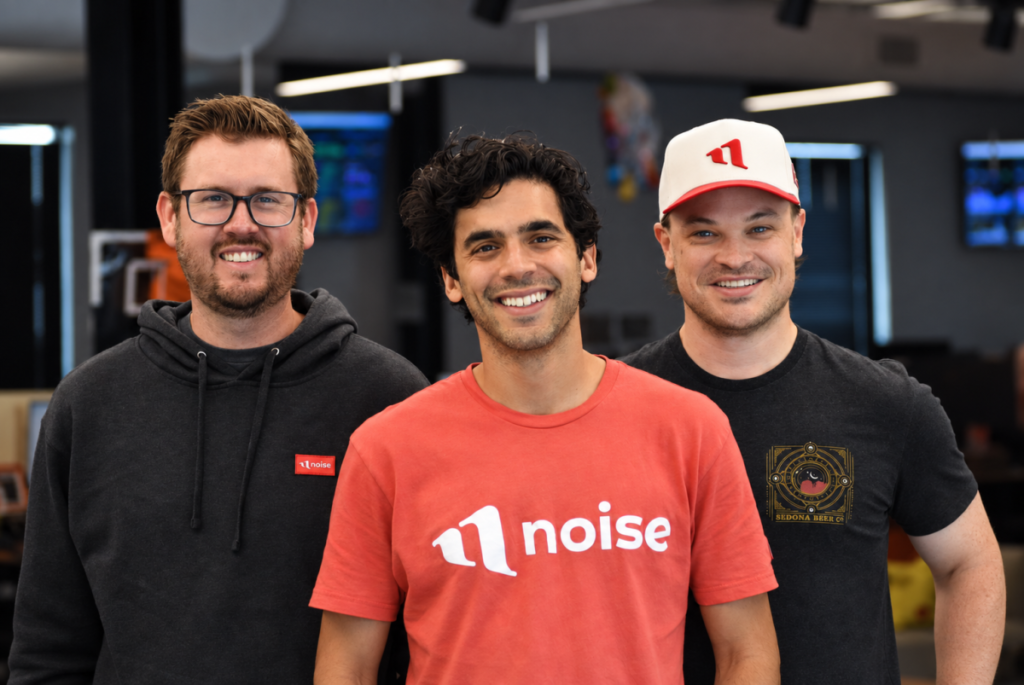
Founded in 2025 by Diego Kafie, Stu Feldt, and Nic Weber, Noise emerged from their two-year experience developing a mobile gaming application called Playbite. The platform currently boasts a community of 1.5 million creators.
According to CEO Kafie, top creators on Noise can earn over six figures annually, with the platform taking a commission from what brands pay creators after views are generated.
“Our leading brands collaborate with thousands of creators automatically,” Kafie stated. Presently, many of their clients are mobile applications, particularly those operating with startup budgets, looking to leverage influencer marketing. The ultimate aim is to expand their services to accommodate businesses of all sizes.
“They are keen on reaching a broad spectrum of potential customers, making them ideal users for Noise, where they can efficiently recruit a vast network of advocates and users,” Kafie explained. “This provides brands with unparalleled content diversity and reach at a fraction of the cost associated with traditional marketing strategies.”
Kafie, Feldt, and Weber developed the concept for Noise based on their experiences at Playbite. “We experimented with various creative marketing techniques,” Kafie recalled regarding their efforts to scale Playbite. They initially attempted to recruit gamers and teach them how to create social media content promoting the app. “We started with five, then ten, 25, and ultimately 100 participants,” he noted. “Before long, our app installations surged as this dedicated community shared engaging content daily about mobile games and specifically our application.”
Most critically, he emphasized, this was achieved “at a fraction of the cost of conventional marketing approaches,” as they focused on training ordinary individuals to become content creators from the ground up. “If we had sought established creators with significant followings, their rates would have been prohibitive for our limited budget.”
This experience sparked the idea for Noise. The newly acquired funds will be utilized to enhance product features and expand the team. Recently, Noise introduced its Organic-to-Ads program, allowing brands to convert videos created by Noise creators into paid advertisements on platforms like Meta and TikTok, in addition to the original posts by the creators.
“Creators will continue to post on their platforms,” he clarified. “However, brands can also amplify those creatives with paid advertising to reach a broader audience.”
When questioned about whether this model pays creators less than they might earn independently, Kafie asserted that brands set their rates, leaving the decision to creators on whether to accept or decline offers. He also highlighted that the platform is dedicated to collaborating with “everyday individuals and transforming them into brand-new creators.”
With the increasing difficulty of becoming an influencer today, Kafie believes this model could alleviate the challenges, stress, and financial barriers that many face when striving for success in content creation.
Upon joining the platform, users engage in Noise’s training modules designed to instruct them on how to create brand-oriented content. Initially, these new creators can participate in select campaigns, but as they complete more training and secure further opportunities, they can access higher-paying projects, Kafie explained.
“By democratizing the process of becoming a creator for anyone with a smartphone,” he said, “we’re lowering costs for brands while enabling millions to earn their first dollar online.”